

Lipedema: The Hidden Condition Affecting 1 in 9 Women
Lipedema makes weight loss nearly impossible through traditional methods. Lipedema Clinic exists to educate, support, and offer non-surgical treatments so women can take control.
Take Dr. Jonie Girouard’s 90-second quiz below to see if you have any symptoms.
Education
Learn about Lipedema for yourself and so you can advocate for others.
Explore articlesFind Care
See a Lipedema specialist by video, or in person with a clinician Dr Jonie has trained.
Book an appointmentTreatments
Explore and learn about the wide range of Lipedema treatments available to women.
See treatment optionsWhat is Lipedema?
Lipedema is a relatively common fat disorder, mainly affecting women, often mistaken for simple obesity.
One of the hallmarks of this disease is that Lipedema fat is relatively resistant to genuine efforts at diet and exercise. These measures may lead to weight loss in other areas, but the size of the hips and legs remains disproportionately large.
Lipedema progresses through stages without treatment or lifestyle adjustments.
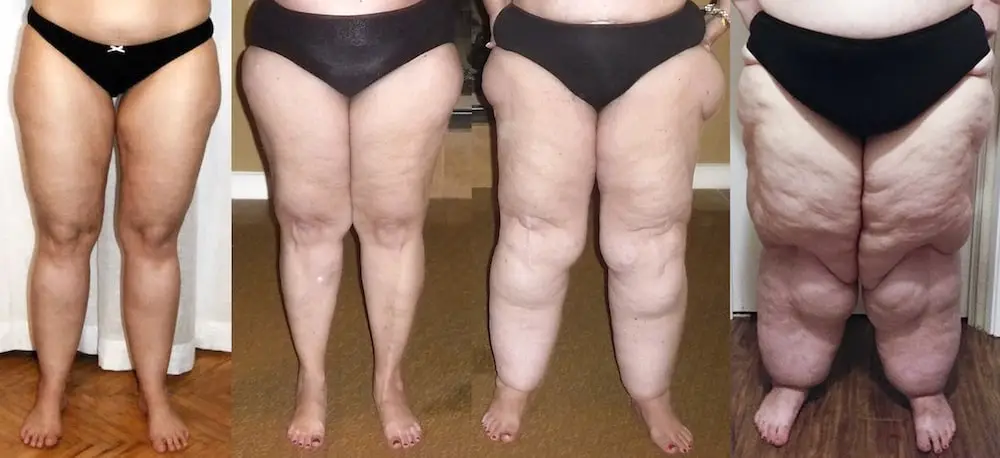
It’s not your fault
Nearly all of my Lipedema patients have heard the line: “If you just ate less and exercised more, you wouldn’t have a problem.”
That line hurts because it’s not true.
Your legs, hips and buttocks are much bigger or out of proportion to the rest of your body. You’ve tried diets and exercise but no matter what you do, you just can’t seem to lose the weight from your legs, hips and buttocks.
The truth is, it’s not your fault. You’re not obese. Dieting and exercise alone is not going to help you lose this weight. Lipedema is not your fault.
If today’s your first day here – take a breath, repeat the words, “It’s not my fault.”
— Dr. Jonie Girouard, M.D.
The next steps are simple:
Take the Lipedema Quiz
and confirm if you have the symptoms.
Attend our next virtual event
or watch a replay here to learn more about Lipedema and what it means for you or someone you may know.
Be empowered
knowing it’s not your fault and today is the beginning of your journey.

Medically Supported & Evidence Backed
Lipedema Clinic is led by our Medical Director, Dr Jonie Girouard M.D.
Dr. Jonie Girouard M.D. is Board Certified in Family Medicine and Obesity Medicine with a special interest in Lipedema. Dr. Jonie is Lipedema Clinic’s founder and Medical Director.
Dr. Jonie works tirelessly to campaign for greater awareness within the medical community whilst also promoting healthier lifestyles and wellness for her Lipedema patients through medically researched programs, events and educational content.
You’re not alone…
1 in 9 women have Lipedema, a condition that can affect any woman…
“I tried everything from diets to working out hours a day, but nothing helped me lose the weight. When I was diagnosed with Lipedema, I discovered it’s a disease of fat, not of overeating.”

Beau Dunn
From CSI
“How anyone can accuse sufferers of being lazy or fat is beyond me. It is a medical condition that 1 in 9 women suffer with, often in silence, often misdiagnosed.”

Shaughna Phillips
From Love Island
Frequently Asked Questions
What is the best treatment for Lipedema?
The best treatments include compression therapy, manual lymphatic drainage, and lifestyle changes (conservative therapies). Advanced cases may require liposuction specifically for Lipedema but this has its own risks and still requires ongoing conservative therapies. Learn about treatment options here.
Are there any celebrities with Lipedema?
Yes, several celebrities including Beau Dunn and Shaughna Phillips, have shared their Lipedema journeys, helping to raise awareness and reduce stigma around the condition.
What are the treatment options for Lipedema in the legs?
Treatment for Lipedema in the legs includes lifestyle changes, compression garments, manual lymphatic drainage, and specific exercises. Supplements and medications are often used. Surgery may be an option for severe cases. Explore treatment options here.
What is Lipedema surgery, and is it effective?
Lipedema surgery, usually liposuction, can effectively reduce symptoms like pain and swelling by removing diseased fat. It’s most effective in combination with non-surgical treatments. Learn more about treatment options here.
Can Lipedema make your legs appear skinny or fat?
Lipedema typically causes disproportionate fat buildup in the legs, giving them a larger appearance, even if the upper body is thin. This is one of the main symptoms for potential Lipedema. Understand how Lipedema affects body shape here.
Is my fat in the legs due to Lipedema or just fat?
If your legs remain large despite weight loss and you experience pain or easy bruising, you might have Lipedema. This is one of the main symptoms for potential Lipedema. Learn how to tell Lipedema fat from normal fat here.
Can Lipedema affect the arms?
Yes, in later stages, Lipedema can affect the arms, leading to swelling, tenderness, and easy bruising. Read about Lipedema types and stages here.
What causes Lipedema?
Lipedema is linked to hormonal changes, genetic predisposition, and is often triggered during puberty, pregnancy, or menopause. It is a fat disorder meaning the fat cells mutate differently and are resistant to traditional diet and exercise. Explore the causes of Lipedema here.
How do I know if I have Lipedema in my legs?
Signs include symmetrical fat accumulation, pain, and a feeling of heaviness in the legs, that is resistant to diet and exercise. Learn how Lipedema is diagnosed here.
Is surgery the only treatment for Lipedema?
No, surgery is just one option. More commonly, non-surgical treatments like compression, diet, and lymphatic massage are used to help manage symptoms effectively. Explore non-surgical treatments here.
Can Lipedema affect skinny people?
Yes, even women with a slim upper body can have Lipedema, which causes disproportionate fat in the lower body. Discover how Lipedema affects thinner women here.
What are the early signs of Lipedema in the arms?
You may notice excess fat, tender lumps within the fat, pain, and easy bruising in the upper arms, typically in later stages of Lipedema. Learn how to recognise the signs here.
What is the difference between Lipedema and obesity?
Lipedema is an inherited fat disorder resulting in abnormal fat accumulation and mutation. Lipedema doesn’t respond to traditional diet or exercise. Obesity is often due to excessive calorie intake and can be managed with traditional weight loss methods. Read more about Lipedema vs obesity here.
Can Lipedema affect my whole body or just certain areas?
Lipedema primarily affects the legs and arms, but if untreated, it can spread to other areas and lead to lymphedema. Learn how Lipedema progresses here.
Can weight loss cure Lipedema?
No, Lipedema fat is resistant to traditional diet and exercise, but managing your overall health can help prevent its progression. There are certain ways to reduce inches, relieve pain and improve living with the condition. Understand why here.
Is Lipedema real?
Yes, Lipedema is a legitimate medical condition, first identified in 1940 by Dr. Allen and Dr. Hines at the Mayo Clinic. It affects the abnormal accumulation of fat, primarily in the legs and arms, and is often misdiagnosed as obesity. Learn more about Lipedema here.